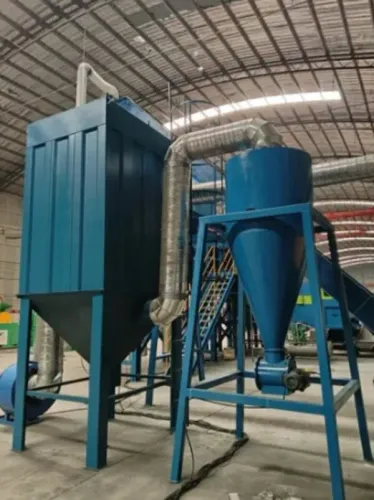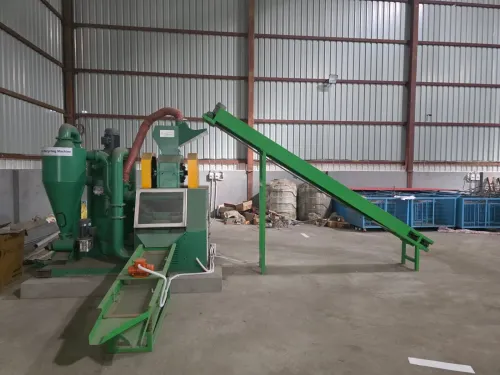
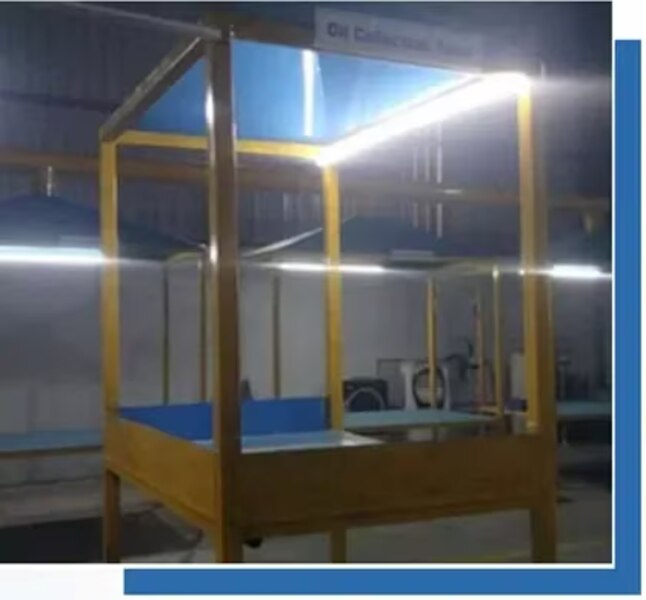
A collector table quotation in Ghaziabad can range from a basic gravity-drain frame to a powered system with filtration, storage, controls and commissioning. Before comparing prices, define the oil, compressor feed, recovery method and included equipment so you can judge the delivered cost, operating limits and supplier support on the same basis.
Key takeaways
- Budget ₹35,000–₹80,000 for a basic carbon-steel gravity-drain table.
- Expect ₹1.2 lakh–₹3.5 lakh for a powered table with pump and filtration.
- Request pump capacity, tank volume, steel grade and electrical details in writing.
- Test drainage, filtration, level indication and leak control before accepting delivery.
What does an oil recovery collector table cost in Ghaziabad?
Budget ₹35,000–₹80,000 for a carbon-steel gravity-drain table with a collection sump. A powered table with a pump, coarse filtration, level indication and covered tank usually costs ₹1.2 lakh–₹3.5 lakh. Vacuum assistance, stainless-steel wetted parts, automatic filtration or explosion-protected electrics can push the oil recovery collector table price in Ghaziabad above ₹4 lakh.
| Option | Indicative price | What the quotation usually covers |
|---|---|---|
| Gravity-drain table | ₹35,000–₹80,000 | Carbon-steel frame, perforated top and sump |
| Powered collection table | ₹1.2 lakh–₹3.5 lakh | Pump, coarse filter, level indication and covered tank |
| Advanced system | Above ₹4 lakh | Vacuum, stainless wetted parts, automatic filtration or protected electrics |
Treat these as budgeting ranges, not live quotations. The industrial oil collection table cost changes sharply when suppliers quote only the frame instead of an operating system. Ask for each item separately:
- GST
- Freight
- Unloading
- Installation
- Commissioning
- Drum
- Drilling tools
- Electrical panel
- Safety guards
- Pump
- Filter housing
- Hoses
- Tank
- Weighing system
- Vacuum unit
PT-OR 100 has no useful meaning until the supplier defines it. It might mean drum volume, hourly unit capacity or an internal design code; demand the actual working capacity and measured throughput. A low frame-only quote is not comparable with a complete table.
How should you compare oil recovery table suppliers in Ghaziabad and Delhi-NCR?
Compare the delivered system, not the bare frame. Send the same specification to every oil recovery table supplier before comparing the final figure, including transport to Ghaziabad, site unloading, installation, performance testing, operator training and commissioning time.
Request these documents and figures:
- General-arrangement drawing, design load, sump volume and working-tank volume
- Pump flow at a stated oil viscosity, filter rating in microns and wetted-material grade
- Electrical enclosure rating and motor nameplate
- Delivery lead time, warranty exclusions, spare-parts list and after-sales response terms
Visit the factory or a reference installation. Check whether the quoted team owns unloading, commissioning and service, rather than passing those obligations to a third party. Privi is worth evaluating when custom drum arrangements, controls, guarding, plant integration and documented spares require direct engineering access.
| Supplier type | Strength | Confirm before ordering |
|---|---|---|
| Manufacturer | Custom engineering and direct technical support | Drawing ownership, testing responsibility and service response |
| Trader | Standard frame, lower price or immediate availability | Actual maker, warranty owner, spare source and installation support |
| Local supplier | Easier site visit and faster field response | Reference installations, technician coverage and commissioning scope |
A trader can suit a standard table when price and immediate availability matter, but obtain the warranty issuer in writing. If you search “buy collector table near delhi,” reject offers that omit tank capacity, pump duty, filter grade, delivery period or installation from the final delivered figure.
Related product
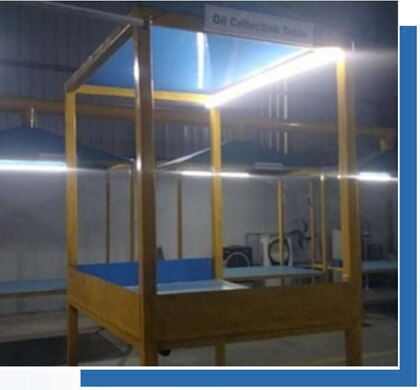 | OIL RECOVERY/COLLECTOR TABLE USE FOR:- TO DRILL FRIDGE COMPRESSOR AND COLLECT OIL IN DRUM MODEL NO. PT-OR 100 CAPACITY:- 1500 LTS IN ONE HOUR COLLECTION. View product → |
What process and feed specification should the table handle?
An oil collection station is not a refrigerant recovery machine. Before drilling, secure each refrigerator, use a compatible recovery machine and cylinder, and confirm zero residual pressure; drilling a charged shell risks venting and sudden pressure release.
- Secure each refrigerator on the table before starting work.
- Recover or remove the refrigerant into the correct cylinder.
- Verify zero pressure with a gauge before puncturing the shell.
- Drill with guarded tooling and keep hands clear of the chuck.
- Route oil through a hose and valve into a closed drum.
- Stop the machine, isolate the drum, and move the drained compressor onward.
Specify compressor dimensions and weight, refrigerator types, oil grade and viscosity, sludge and metal-particle content, moisture and refrigerant limits, and acceptable feed condition. State whether extraction is gravity, puncture-and-drain, pneumatic, or vacuum-assisted. A gravity table will not reliably remove oil trapped in cavities or pipework.
Define 1,500 litres per hour as maximum flow or measured throughput, including compressor loading, oil viscosity, drum changes, and operator time. An oil separation table for recycling usually collects and coarsely drains source oil; it is not an API oil-water separator for emulsions.
| Method | Labour and contamination | Throughput and maintenance |
|---|---|---|
| Manual draining | High labour; variable contamination | Low; few moving parts |
| Integrated drilling and collection | Lower labour; shell debris needs control | Medium to high; drill and guards wear |
| Vacuum extraction | Lower residual oil; cleaner transfer | High; pump, seals and hoses need service |
| Dedicated oil separation | Best for controlled feed quality | Higher equipment and maintenance cost |
Which drum, electrical and site details affect the delivered system?
A delivered system needs more than a 3 kW, three-phase, 50 Hz motor and machine height. Specify the drum or tank by working capacity based on the largest batch plus headroom, material, closed lid, vent, spill bund, drain valve, level indicator, high-level alarm or shutoff, clean-out access and removable weighing.
Provide twin drums or an isolation valve so one can change over without stopping work.
Confirm these electrical and installation details before comparing industrial oil collection table cost:
- Supply voltage, phase balance, isolator size, cable cross-section, earthing, overload relay, short-circuit protection, control-panel enclosure, emergency stop and motor-rotation controls.
- Transport dimensions, machine weight, floor loading or foundation, drum movement route, access clearance, ventilation, noise level and operator staffing.
- Refrigerant recovery equipment and cylinder, zero-pressure confirmation, guarded drilling, ventilation, ignition control, eye protection, cut-resistant gloves, fixed guards, emergency isolation and an oil or refrigerant spill kit.
A standard motor is not an installation specification, especially where flammable vapour requires area-classification and electrical-equipment details.
| Cost item | Lifetime effect | Check before ordering |
|---|---|---|
| Electricity and labour | Rises with running hours and loading time | Record measured throughput |
| Drill bits, seals, hoses and filters | Wear creates stoppages and leaks | Request prices and replacement intervals |
| Cleaning and contaminated-oil disposal | Adds handling cost even when collection volume is high | Define waste route and service frequency |
| Downtime | Can exceed consumable cost | Require non-stop drum changeover and spare parts support |
How do you test, maintain and justify the purchase?
Accept the table only after a witnessed trial with representative compressors, not a demonstration using clean oil. Record the oil viscosity, measured flow, leaks, and whether the supplier’s stated filtration and separation performance matches the quotation; collection volume does not prove recovered-oil quality.
1. Test the drill, chuck, drum connection and controls under load. Verify the motor nameplate against the order, inspect welds and guards, test the emergency stop, and obtain wiring drawings, a maintenance schedule, spare-parts list and written warranty before signing acceptance.
2.
Tie maintenance to operating hours, shifts or visible wear: inspect the drill and chuck each shift; check hoses, valves, seals and the filter at each changeover; inspect bearings and motor monthly or at the manufacturer’s stated hours; examine the control panel and emergency-stop circuit each shift; check the drum connection for leaks whenever the drum changes.
3. Calculate payback from compressor count × recoverable oil per unit × tested oil value, then add labour saved. Subtract rejected or contaminated oil, electricity, filters, maintenance and downtime; never value all collected liquid as reusable oil. This gives a defensible purchase case alongside the oil recovery collector table price in Ghaziabad.
Keep labelled closed containers, spill containment and batch traceability. Record refrigerant recovery by cylinder and job, store hazardous waste under local rules, and retain handover documents from an authorised waste or oil recycler in your jurisdiction. Before choosing an oil recovery table supplier, make these records, performance limits and warranty obligations part of the contract.
Frequently asked questions
What does an oil recovery collector table cost in Ghaziabad?
A carbon-steel gravity-drain table costs about ₹35,000–₹80,000. Powered models with a pump, coarse filtration, level indication and covered tank cost about ₹1.2 lakh–₹3.5 lakh. Vacuum assistance, stainless-steel wetted parts, automatic filtration or explosion-protected electrics can raise the price above ₹4 lakh.
How should you compare oil recovery table suppliers in Ghaziabad and Delhi-NCR?
Compare suppliers by verified process capacity, tank and drum compatibility, pump specifications, filtration design, electrical protection, installation scope, warranty, spares and service response. Ask for a detailed quotation rather than comparing headline prices.
What process and feed specification should the table handle?
Specify the oil type, viscosity, temperature, solids content, free water, daily throughput, drain time and required filtration level. Confirm whether the table is for gravity collection, pumped transfer, oil-water separation or recycling feed preparation.
Which drum, electrical and site details affect the delivered system?
State the drum size, sump volume, outlet height, floor space, lifting access, power supply, motor rating, control-panel location and hazardous-area requirements. These details affect fabrication, transport, installation and the final delivered cost.
How do you test, maintain and justify the purchase?
Run a site acceptance test with representative oil, checking drainage, pump flow, leaks, filtration, level indication and emergency stopping. Record cleaning intervals, filter costs, seal replacement needs and recovered-oil value before approving the purchase.
Keywords