A machine listed as a density separator may be an air classifier, zig-zag separator, air table, wet sink-float system, or combined plant, so the name alone is not enough to compare suppliers. By the end, you will have a specification, quotation checklist, site-screening process, and acceptance-test plan for choosing a suitable Ghaziabad supplier.
Key takeaways
- Define the separation principle and target fractions before requesting quotes.
- Send feed composition, moisture, particle size, and throughput data to every supplier.
- Compare installed-system costs, including conveyors, dust control, utilities, and commissioning.
- Run a sample trial with written recovery and purity targets before purchase.
Define the Separation Job Before You Contact a Supplier
Do not ask for a “density separator” until you name the separation principle and the fractions you need. The term can mean an air classifier, zig-zag separator, air table, wet sink-float system, or combined unit.
For dry e-waste, air-based separation is usually the starting point when the feed contains plastics, wire, films, dust, and heavier metals.
1. Describe the feed: particle-size distribution, moisture content, bulk density, particle shapes, and composition. State whether you are processing PCB powder, cable granules, mixed plastic, or another stream; a machine rated at 500 kg/h is not comparable without these conditions.
2. Choose air separation when the feed must remain dry and particles differ in aerodynamic behaviour. Do not rely on material density alone: similarly sized copper and plastic may separate well, while different-sized or irregular particles can overlap.
3. Set a maximum moisture limit and say whether covered storage or drying is included. Wet or oily scrap agglomerates, sticks to chutes, changes apparent aerodynamic weight, and shifts the cut point.
4. Define the products you want: light fraction, heavy fraction, target recovery, and acceptable purity. Treat density separation as a concentration step for mixed e-waste; magnetic, eddy-current, optical, or manual sorting may still be needed for ferrous metal, aluminium, copper, glass, and circuit-board fragments.
Give this specification to every density separator for scrap processing supplier before comparing quotations.
How to Find and Qualify a Ghaziabad Supplier
Before requesting a quotation, verify that the local seller can identify the machine principle, support the installation, and state exactly what its capacity figure measures. A search result for a density separator supplier in Ghaziabad is not proof of a serviceable local supply route.
1. Record the supplier’s registered name, exact Ghaziabad address, sales contact, GST details, quotation validity, and the person responsible for technical clarification.
2. Ask whether the offered machine uses air, water, or both, and whether it is an air classifier, zig-zag separator, air table, sink-float tank, or combined system. The name “density separator” alone is too vague.
3. Require a process flow diagram showing the separator, feeder, screens, magnets, fans, filters, conveyors, discharge points, and dust-control equipment included in the price.
4. Ask whether the stated capacity is feed throughput or finished-product output, and demand the test conditions: particle-size range, moisture limit, bulk density, contamination, and target recovery and purity.
5. Check the machine footprint, foundation loads, connected electrical load, airflow or water demand, maintenance access, covered-storage requirements, delivery area, installation coverage, commissioning method, and lead time.
6. Request separate prices for the machine, auxiliaries, freight to Ghaziabad, erection, electrical work, taxes, spares, and performance testing. Ask Privi the same questions so its quotation can be compared on scope rather than headline price.
A supplier offering density separator for sale in Ghaziabad should provide these details in writing before you compare totals. If it refuses, you cannot tell whether a low price covers a workable plant.
Related products
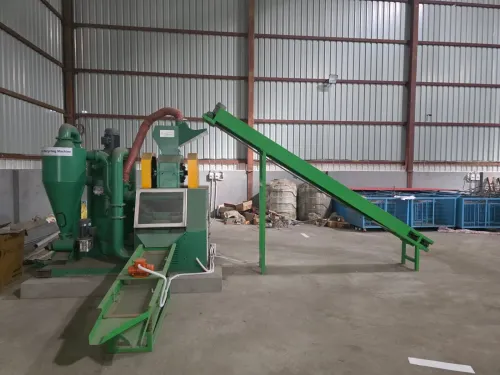
 | DENSITY SEPARATOR Use For TO Separate The Material Based On Density Capacity Powe r Output Size Process Of Operation Sound 500 kg per h / Customize :- 5-6 mm Spinner... View product → |
 | DENSITY SEPERATOR Density Separator uses water or air flow to split heavy metals (copper) from light plastics/fibers in crushed PCB powder Floating tank method - heavy... View product → |
Send Feed Data That Makes Quotations Comparable
A capacity of 500 kg/h means little without the conditions behind it. Send a representative feed sample or a complete specification, then require the quotation to state the tested feed rate, product rate, recovery, purity, and operating limits for that exact material.
- Particle-size distribution: percentage below 1 mm, 1–3 mm, 3–10 mm, and above 10 mm
- Moisture content, in percentage by weight
- Loose bulk density, in kg/m³
- Material composition, including plastics, metals, wire, film, dust, and fines
- Particle shapes, such as flakes, granules, fibres, pellets, or irregular fragments
- Contamination limits, including oversize pieces and tramp metal
- Target recovery and purity for every output fraction
| Figure to compare | Require from each supplier | Why it matters |
|---|---|---|
| Throughput | Feed capacity in kg/h at your stated size, moisture, and bulk density | Wet or compacted feed can reduce actual capacity |
| Separation result | Recovery and purity percentages for each product | A high tonnage figure can hide an unusable split |
| Operating demand | Airflow, fan pressure, motor power, and dust-extraction volume | These determine electrical and extraction costs |
| Included equipment | Hopper, controlled feeder, conveyors, cyclones or filters, ducting, and controls | An industrial density separation machine is not a complete line by itself |
| Test basis | Sample mass, test duration, feed composition, and laboratory method | It prevents suppliers from quoting different conditions |
State whether the proposal uses air, water, or both. A wet system also needs water circulation, dewatering, sludge handling, corrosion protection, and wastewater provisions; do not compare it with a dry machine as a direct substitute.
Price the Complete Installed System, Not the Separator Body
A low separator-body price can hide most of the installed project cost. Density separator cost depends on throughput, feed size, construction material, wear protection, feeder accuracy, automation, and whether the unit uses air, water, or both.
Request a line-item quotation covering:
- Feed hopper, controlled feeder, separator chamber, discharge conveyors, and product chutes
- Induced-draft fan, cyclones or filters, ducting, dampers, and dust-discharge equipment
- Electrical panel, variable-frequency drives, sensors, cabling, earthing, and control integration
- Upstream or downstream magnets, eddy-current separator, screen, shredder, or manual picking station
- Freight to Ghaziabad, unloading, erection, foundation work, electrical installation, commissioning, and operator training
- Taxes, recommended start-up spares, wear parts, maintenance tools, and performance testing
| Quotation scope | What it includes | How it affects comparison |
|---|---|---|
| Separator body only | Chamber, frame, and basic outlet | Lowest headline price; excludes operation |
| Machine package | Feeder, fan, filter, controls, conveyors, and chutes | Comparable for equipment purchasing |
| Installed system | Machine package plus freight, erection, electrical work, commissioning, and testing | Closest to the capital budget |
Ask the supplier to state footprint, foundation loads, connected electrical load, compressed-air or water demand, filter-access space, and bearing-maintenance clearance. A complete e-waste line with shredding, screening, magnetic separation, dust extraction, and conveyors is not comparable with a standalone air table.
Require separate prices for each scope and identify which performance guarantee applies to the stated feed and product specification.
Use a Sample Trial and Written Acceptance Test Before Buying
Approve a density separator for scrap processing only after it passes a trial on your own representative feed. A clean plastic sample can hide failures caused by moisture, fines, wire, irregular shapes, or changing composition. Test the industrial density separation machine at the quoted feed rate, not at a convenient laboratory setting.
- Define the trial feed by batch weight, particle-size distribution, moisture content, bulk density, and composition. Include the fines and contaminants that will reach production.
- Run the machine continuously for a shift-length period at the agreed feed rate. Record stoppages, bridging, buildup, dust leakage, airflow or water flow, power draw, and operator interventions.
- Weigh the feed, heavy fraction, light fraction, rejects, and process losses. Test representative samples for heavy-fraction recovery and light-fraction contamination; write the calculation method into the trial protocol.
- Set pass limits before testing, such as minimum recovery, maximum contamination, maximum dust escape, permitted power consumption, and acceptable throughput. Do not accept “good visual separation” as a result.
- Sign an acceptance sheet stating the feed conditions, operating settings, measured results, sampling method, and remedy if the machine fails. Link final payment, replacement parts, retesting, or return rights to those figures.
If the supplier proposes wet sink-float separation instead of dry air separation, include water circulation, dewatering, sludge removal, corrosion protection, and wastewater handling in the trial. A sharper density cut is not useful if the complete line cannot operate continuously at your site.
Frequently asked questions
What should you define before contacting a density separator supplier in Ghaziabad?
Name the separation principle and target fractions first. Specify whether you need air classification, zig-zag separation, an air table, wet sink-float separation, or a combined system.
What feed data makes density separator quotations comparable?
Send each supplier the material type, hourly throughput, particle-size range, moisture content, bulk density, contamination, target products, and required recovery or purity.
What should density separator cost include?
Price the complete installed system, including the separator, feed and discharge conveyors, screens, blowers or pumps, dust collection, electrical controls, structures, installation, commissioning, and operator training.
Why run a sample trial before buying an industrial density separation machine?
A trial shows whether the proposed machine achieves your required recovery and product purity on your material. Put the feed conditions, test method, output targets, and acceptance procedure in writing.
Keywords