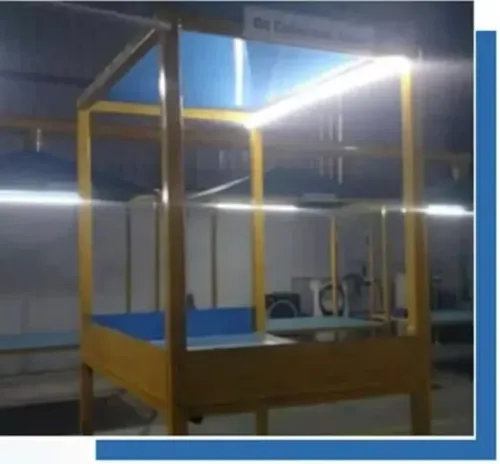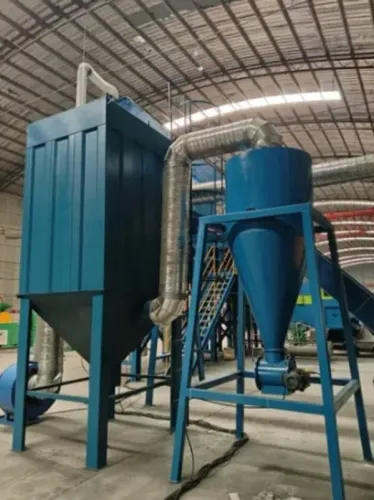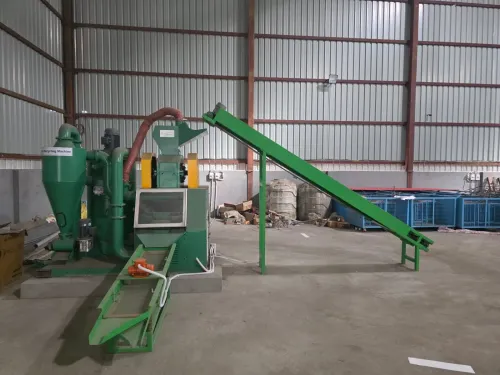
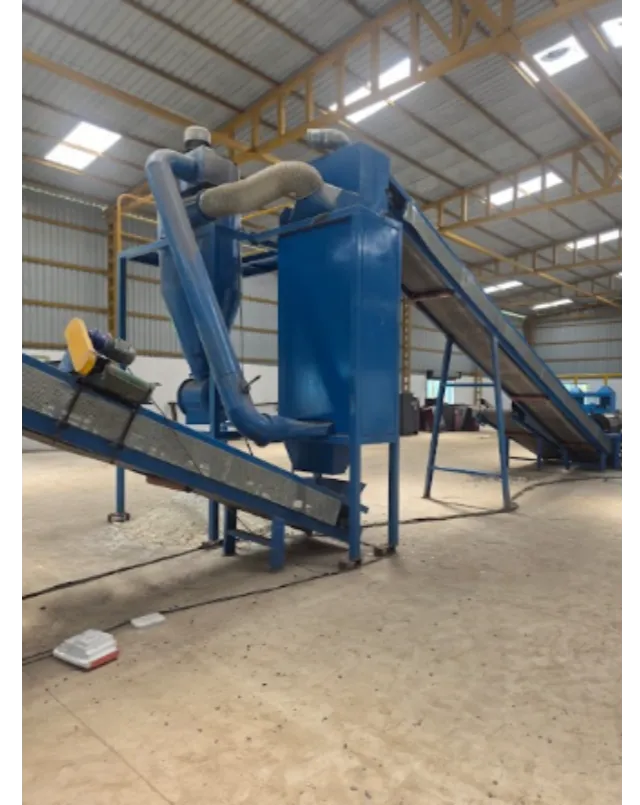
A standard density separator and a density separator with cyclone both classify materials according to differences in physical behaviour. The important distinction is that the cyclone provides an additional stage for managing air-carried particles. This can be valuable when the feed produces significant dust or lightweight fines.
The more complex system is not automatically the better choice. Plant owners should compare feed characteristics, cleanliness requirements, recovery targets, installation space, and operating costs before deciding.
Standard Density Separation
A standard unit typically combines vibration and adjustable airflow across a separation deck. Dense material and light material move towards different discharge points. It can work effectively when the feed is dry, properly sized, and not excessively dusty.
Its advantages may include:
- Simpler layout
- Lower number of connected components
- Easier access for cleaning
- Potentially lower initial investment
- Reduced ducting requirements
However, lightweight particles lifted by the airflow still need to be controlled. Depending on the machine design and material, a separate dust-collection arrangement may be necessary.
What the Cyclone Adds
A cyclone receives air containing suspended particles and creates a rotating flow. Centrifugal action moves much of the particulate matter towards the outer wall, after which it falls into a collection outlet. The air then leaves through a separate path and may pass to further filtration.
Within a density-separation line, the cyclone can:
- Collect lightweight process material
- Reduce the load reaching a secondary filter
- Help manage airborne fines
- Support cleaner material handling
- Create a separate recoverable or disposable fraction
A cyclone is not a complete solution for every fine contaminant. Very small particles may remain in the outgoing air and require a suitable filter.
Questions to Ask Before Selection
Plant owners should establish:
- How much dust and lightweight material does the feed contain?
- Does the plant already have central dust extraction?
- Is the cyclone output recoverable or waste?
- What final purity is required?
- How frequently does feed composition change?
- Is sufficient space available for ducts and collection bins?
- Will secondary filtration be included?
Pressure losses through ducts, cyclones, bends, and filters also affect fan selection. An incorrectly sized fan can weaken separation or carry valuable particles away from the desired outlet.
Operating and Maintenance Considerations
Cyclones require inspection for blockage, abrasion, leakage, and material buildup. Collection bins should be emptied before overfilling disrupts airflow. Duct joints and airlocks must remain sealed to maintain stable pressure.
Recycling companies in Ghaziabad serving industrial customers across Delhi NCR may process highly variable scrap. Trial separation using representative material is the most reliable way to choose a configuration.
Privi can develop density-separation equipment around the buyer’s input and plant arrangement. A cyclone-equipped model is justified when it meaningfully improves airborne-material collection and process control. Where those conditions do not exist, a correctly configured standard separator may provide the required result with a simpler installation.
Keywords