The purchase only makes financial sense when a recycler can secure intact CRT feedstock, prepare it safely, control lead-bearing dust and sell every separated fraction. By checking the workflow, installation requirements, compliance duties, realistic throughput and whole-life cost, you can decide whether to buy, outsource or use a smaller dismantling setup.
Key takeaways
- Measure complete CRT workflow output, not the cutter’s hourly rating.
- Request safety controls, dust capture and Ghaziabad compliance documents.
- Compare diamond, wire and thermal cutting against your tube mix.
- Include labour, maintenance, disposal and recovered-glass income in CRT recycling machine cost.
Start with the complete CRT workflow, not the cutter’s hourly rating
A 40-tube-per-hour rating can mislead you: it may describe feeding intact, same-size CRTs, not complete processing. For a CRT cutting machine for recycling companies, the real bottleneck is usually depollution before cutting or glass handling after it.
- Receive and inspect each unit, separating cracked, wet or damaged tubes from intact stock.
- Remove the cabinet, circuit boards, cables, degaussing coil, deflection yoke, electron gun and other attachments.
- Clean the envelope, secure it in the fixture, and cut the frit seal between panel and funnel glass.
- Lift the panel and funnel sections apart, collect phosphor dust under extraction, and keep each glass stream separate.
- Package leaded funnel glass in labelled, covered containers and send it to an authorised downstream processor.
Metal, plastic and board material left on the tube reduces cut quality and contaminates the glass. A cracked CRT also changes the handling method; it cannot be treated as normal feed.
Measure the complete cycle on your own mixed stock: inspection, depollution, loading, cutting, separation, cleaning, changeover and packing. Record operator count, tubes per hour, screen-size changeover time, clean panel/funnel separation, glass-fines generation, power demand and blade or heating-element consumption.
The downstream outlet can become the largest constraint: without contracted buyers or authorised treatment for separated panel and funnel glass, the cutter turns saleable CRTs into stored glass fines. Judge the machine on complete processed tonnes, not its headline hourly rate.
Check safety controls and Ghaziabad compliance before commissioning
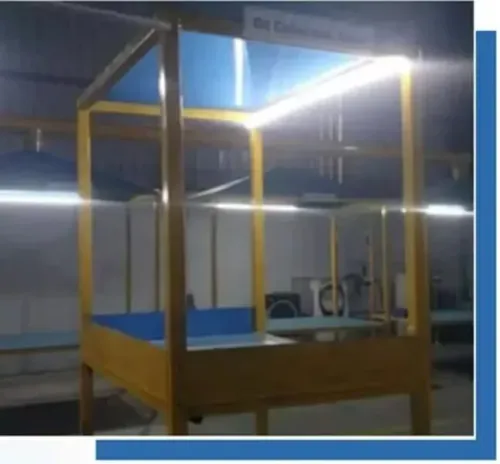
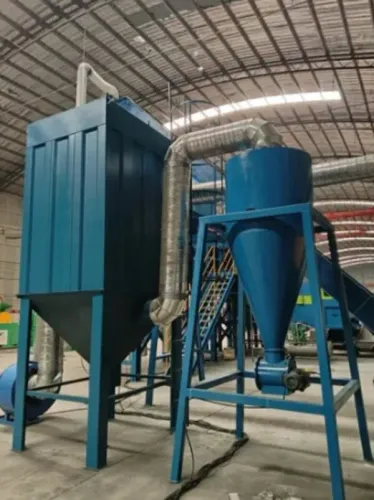
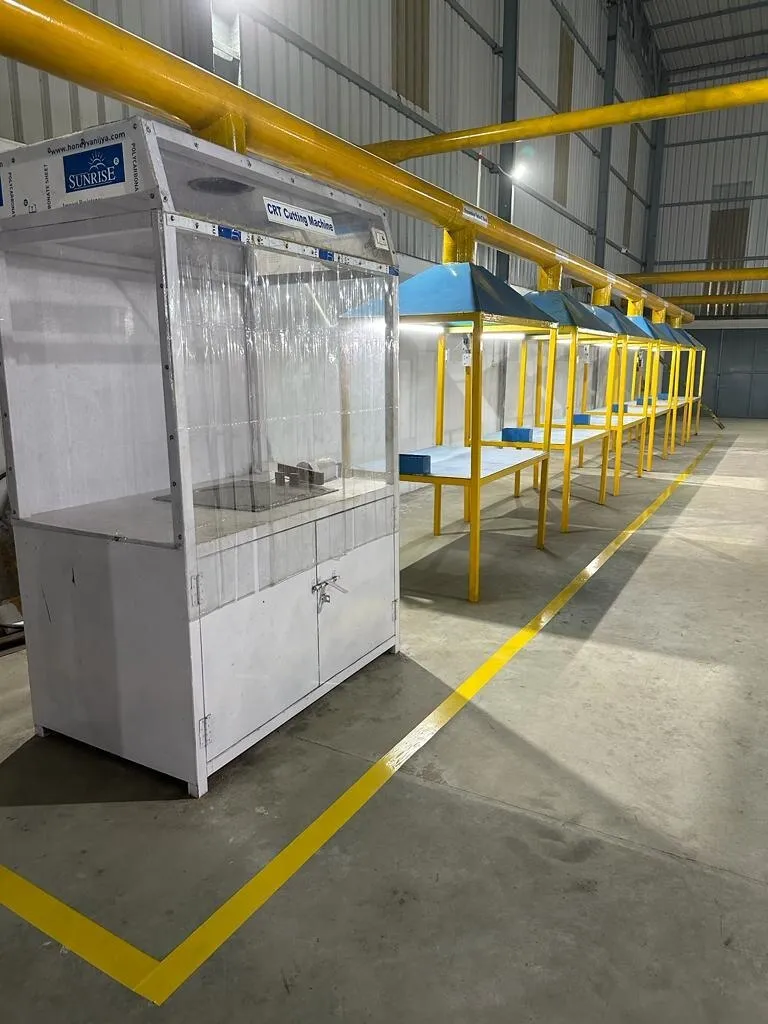
A cutter is not ready for production until its dust, lead and paperwork controls work together. CRT glass cutting equipment in Ghaziabad needs an enclosed cutting chamber, local exhaust ventilation at the cutting point, cleanable ducting and suitable particulate filtration, including HEPA filtration where the exposure assessment requires it.
A general factory fan only spreads phosphor and glass dust.
1. Verify Uttar Pradesh Pollution Control Board Consent to Establish and Consent to Operate conditions before installation and operation. Check registration and record-keeping duties under the E-Waste (Management) Rules, 2022, plus permissions covering storage, treatment or transfer of lead-bearing glass.
2. Obtain written acceptance from authorised downstream handlers for panel glass, funnel glass, phosphor residues and other hazardous fractions. Keep transporter details, handover records and quantity records for every consignment.
3. Separate clean and dirty zones, provide sealed containers for phosphor dust and broken glass, and issue gloves, eye protection, coveralls, suitable respiratory protection and dedicated work shoes. Ban dry sweeping and compressed air; use a suitable industrial vacuum and wet-cleaning method.
4. Post a broken-glass and lead-spill procedure, provide hand-washing facilities, prohibit eating in the work area and train operators before commissioning.
Run the controls during a trial with mixed incoming CRTs, not selected tubes. Stop the trial if dust escapes the enclosure, workers carry contamination outside the dirty zone, or the plant cannot document where leaded glass goes.
A CRT cutting machine for recycling companies is compliant only when the machine, workplace and downstream chain operate as one controlled system.
Compare cutting methods and demand a usable machine specification
Hot-wire systems suit facilities prioritising low mechanical dust; diamond-wheel or saw systems suit buyers prioritising repeatable cuts and consistent geometry. Neither choice is defensible without testing mixed feed.
| Method | Strength | Main failure or operating cost |
|---|---|---|
| Hot-wire | Low mechanical dust and no blade wear | Performance depends on glass condition, CRT geometry, heating control and element life |
| Diamond-wheel or saw | Repeatable cuts and controllable separation | Glass dust, blade wear, extraction demand and fragment management |
Do not accept “automatic” or a nominal 30–40 pieces per hour as a specification. Ask whether that figure means intact tubes fed, fully processed tubes, or a selected screen size with one operator.
CRT glass cutting equipment in Ghaziabad must be priced with an enclosed chamber, local exhaust, cleanable ducting, particulate or HEPA filtration and exposure controls; a general factory fan will not capture dust at the cut.
Put these figures and features into the quotation:
- Tested feed mix, tubes per hour, operator count and changeover time for each screen size
- Panel-to-funnel separation rate, acceptable size range and maximum glass-fines percentage
- Electrical load, compressed-air requirement, machine footprint and maintenance access
- Blade diameter and consumption, or heating-element rating and replacement interval
- Guarded loading, fragment containment, interlocked doors and a documented cracked-tube procedure
- Dust-control readings during acceptance testing, plus collection and packaging arrangements
Run the acceptance test on your actual mixed feed, including damaged tubes. A machine that cuts cleanly in a demonstration but produces unsaleable fines can increase your handling problem rather than solve it.
Calculate the real cost against outsourcing and recovered-material income
Use a 12-month cash-flow model, not the quoted hourly rate. Calculate CRT recycling machine cost as the total installed cost divided by its useful operating months, then add finance, electricity, operators, maintenance, extraction-filter replacement, tooling, PPE, permits, training, residue treatment and downtime.
- Ownership cost per accepted CRT = monthly ownership and operating cost ÷ accepted CRTs processed per month.
- Outsourcing cost per CRT = authorised processing fee + transport + packaging + rejected-load charges.
- Manual cost per CRT = labour time + breakage losses + PPE + cleanup + the value of slower throughput.
- Alternative-equipment cost per CRT = its installed cost and operating expenses calculated on the same basis.
Measure accepted output from mixed Ghaziabad feed, including changeovers and already-damaged tubes. A machine rating based on selected intact screens will inflate savings. Include enclosed extraction, filtration, electrical work and guarding; a general exhaust fan is not a substitute for point-of-generation dust control.
Calculate recovered-material income from actual panel-glass and funnel-glass weights multiplied by contracted buyer prices. Deduct transport, sorting, leaded-glass handling and unsaleable residues. The CRT cutting machine benefits—less breakage, cleaner separation and fewer workers per unit—matter only if buyers accept the separated fractions.
Buy when the monthly saving over authorised outsourcing covers the installed investment within your required payback period at conservative utilisation. Outsource when supply is irregular, volumes cannot fill the machine, or downstream buyers are unconfirmed. Choose another cutter when its lower installed cost delivers equal accepted output and compliance controls.
Use a trial-based buying checklist before committing capital
A CRT cutting machine for buyer guide in Ghaziabad must begin with a witnessed trial, not a brochure rating. Supply the vendor with your actual mix of intact and damaged televisions, screen sizes and staffing pattern. Record the result over a full shift, including preparation and cleanup.
1. Inspect guarded loading, enclosed cutting, interlocked doors, fragment containment and a documented method for cracked tubes. Check local exhaust at the cutting point, cleanable ducting, particulate filtration, phosphor-dust collection and lead-contamination controls. A factory exhaust fan is not an acceptable substitute.
2. Measure complete processed output, not an empty-machine feed rate: tubes per hour, operators required, changeover minutes, power draw, hot-wire or blade consumption, downtime and glass-fines weight. Record clean panel/funnel separation as a percentage.
3. Test at least three screen sizes and your real feed mix. Reject a trial based only on selected intact tubes. Include the percentage of tubes that need manual handling and the time required to package leaded glass.
4. Put acceptance figures, installation scope, training, spare parts, response time, warranty, dust-control performance and payment retention in the contract. State the remedy—rework, replacement or refund—if the machine misses those figures.
5. Verify your E-Waste (Management) Rules, 2022 records, Uttar Pradesh Pollution Control Board consent conditions and authorised downstream arrangement for leaded glass before ordering. Ask Privi to define these interfaces in writing if it is supplying the line.
The CRT cutting machine benefits—less manual breakage, cleaner separation and higher output per worker—disappear when contracted CRT volume or a glass buyer is missing. Include both in your payback test.
Related product
 | CRT Cutting Machine safely cuts open old TV and computer monitors (CRTs) to separate toxic lead glass from reusable panel glass and shadow mask metal. View product → |
Frequently asked questions
What should you measure before buying a CRT cutting machine?
Measure the complete workflow, including depollution, cutting, glass handling and downstream separation, rather than relying on the hourly cutter rating.
Which safety and compliance checks matter in Ghaziabad?
Check guarding, interlocks, dust extraction, lead-glass handling, emergency stops and the licences and records required before commissioning.
How should you compare CRT glass cutting equipment?
Compare the cutting method, tube-size range, changeover time, breakage control, automation, maintenance needs and the full machine specification.
How do you calculate CRT recycling machine cost?
Include purchase and installation costs, labour, electricity, consumables, maintenance, rejects, disposal and the income from recovered materials.
Should you run a trial before buying a CRT cutting machine?
Yes. Test representative CRT types and record throughput, breakage, dust control, operator steps, recovered output and downtime before committing capital.
Keywords