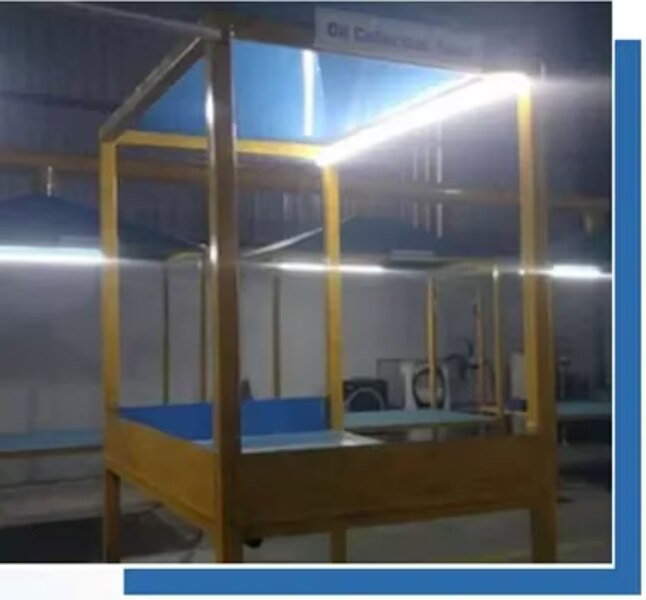
A Ghaziabad quotation for an oil recovery collector table can describe anything from a fabricated spill-collection bench to a pumped, filtered transfer system. Before you compare the oil recovery table price in Ghaziabad, fix the equipment scope, delivered cost, operating capacity and acceptance test so a low headline price does not become an expensive plant bottleneck.
Key takeaways
- Budget tens of thousands for basic manual tables; engineered systems enter the low-lakh range.
- Request stock photos, dispatch dates, installation scope and local service contacts.
- Specify oil volume, drainage rate, drum size, pump duty and electrical supply.
- Test the quotation for spill control, filtration, warranty and commissioning details.
What should an oil recovery collector table cost in Ghaziabad?
A basic manually drained mild-steel table commonly costs tens of thousands of rupees in India. A stainless-steel unit with a baffled sump, pump, piping and filtration can enter the low-lakh range.
The oil recovery table price in Ghaziabad depends on working dimensions, maximum load, sump volume, metal grade, grate, drain outlets and process equipment—not the table name.
| Option | Component-by-component price schedule | Comparison checks |
|---|---|---|
| Basic MS | Painted carbon-steel frame, grate, sump and manual drain; pump and filter excluded | Record usable collection volume, steel thickness, weld method and water leak test |
| Protected MS | Epoxy-coated or galvanised wetted parts, removable grate, multiple outlets and clean-out | Confirm coating system; unlined MS corrodes with water, acidic residues and contaminated oil |
| Stainless process unit | Stainless contact surfaces, baffled sump, pump, piping, filter housing and controls | State pump flow and head, filter rating, warranty and every exclusion |
Ask for one written schedule covering table, grate, drain outlets, pump, piping, filtration, hoses, drum, storage tank, drilling tools, electrical controls and cabling. Require weld inspection and a filled-sump leak test, plus the usable—not gross—volume.
Treat any industrial collector table price as provisional until GST, freight, unloading, erection, commissioning and installation are identified. Compare delivered cost only after the supplier states warranty duration, filter replacements, pump seals, and exclusions.
Painted carbon steel is cheapest; epoxy or galvanising adds protection, while stainless contact surfaces cost more but reduce corrosion and cleaning risk.
How do you verify stock, delivery and service from a Ghaziabad supplier?
“Available” must mean a physically finished unit, not a table that will be fabricated after your order. A catalogue photograph does not prove local stock. Before you buy oil recovery table equipment, ask for:
1. A current photograph showing the date and serial number or job number; the quoted table configuration; confirmed dispatch date; manufacturing lead time if it is made to order; delivery coverage beyond Ghaziabad; unloading responsibility; and whether a site visit is included.
2. Written answers from the oil collector table supplier in Ghaziabad: Is the displayed configuration the quoted configuration? What changes the lead time? Who installs the pump, hoses, drum connection and control panel? Who supplies replacement filters, pump seals and hoses? What service-response area and warranty exclusions apply?
3. A minimum purchase specification: working table size, maximum load, usable sump capacity, material thickness or grade, grate opening, outlet number and locations, pump flow and head, filtration stages and rating, cleaning access, fixed or mobile construction, delivery, installation and commissioning. Add weld and leak-test method, pump make, warranty and exclusions.
4. A commercial scope listing GST, freight, unloading, erection, electrical cabling, drum, hoses, drilling tooling and commissioning. Confirm that the delivered unit—not a similar catalogue model—will be inspected before dispatch, and record the agreed dispatch date and acceptance test in the purchase order.
What capacity and operating method should you specify?
Specify a table’s working dimensions, maximum load, sump volume, grate opening, drain outlets, pump flow and head, filtration and fixed or mobile construction—not only “1,500 litres per hour.” Those details determine whether the oil recovery equipment for recycling matches your compressor line.
1. Place a compatible refrigerator or compressor securely on the grate and align it over the collection zone. Drill its specified low point with approved tooling; oil should fall through the grate onto the sloped surface and into the sump.
2. Open the drain or start the transfer pump, then send the liquid through a hose into a labelled drum. Specify compatible compressor dimensions and weight, the drilling sequence, safe lifting method and removal procedure; otherwise a drilled unit can tip and spill residual oil.
3. Define what 1,500 litres per hour means: maximum pump rate, collection rate for a stated compressor mix, or theoretical throughput. It is not automatically compressors per hour.
4. Require a trial with representative small and large compressors. Record drain time, residual oil, operator count, blocked-filter behaviour and actual units per hour.
5. Use separate containers for compressor oil, transformer or capacitor oil, hydraulic oil, oily wipes, contaminated absorbent and aqueous residues. Mesh removes solids; settling, coalescing or an oil-water separator removes water. Recovered oil may still need filtering, separation and weighing before reuse or dispatch.
What drum, pump and electrical details prevent spills and downtime?
Specify the collection drum instead of accepting “drum included.” State capacity, oil-compatible material, bung or quick-connect inlet, venting, hose diameter, secondary containment, and a level indicator or high-level switch. Add a positive fall to the sump, no dead pockets, removable grating or access covers, a suction strainer, clean-out, and dry-run protection.
- Require pump selection against contaminated-oil viscosity, suction lift, and suspended metal or plastic fragments. A centrifugal pump without an accessible strainer and clean-out can block; without dry-run protection, it can fail when the sump empties.
- Require overfill protection through a high-level alarm or automatic pump cut-off, plus a visible emergency stop. Specify spill trays, absorbent material, and a written method for removing a drilled compressor without tipping residual oil onto the floor.
- Obtain the electrical schedule: voltage, phase, starter or control-panel arrangement, overload and phase-loss protection, isolator, earthing point, cable termination, and site connection requirements.
- Before installation near solvent vapours, batteries, or charging areas, obtain the hazardous-area classification and required protection. Do not assume an ordinary motor and switch are suitable, or that an explosion-proof motor is included.
- Ask how operators inspect and clean the table after each shift, including sludge removal, hose disconnection, and drum changeover. A sealed sump hides metal fines until they restrict flow and cause downtime.
How should you test the quotation before ordering oil recovery equipment?
Before you buy oil recovery table equipment, make the quotation a written scope and tie payment to a witnessed acceptance test. Require these items by name:
- Table dimensions, load rating, sump volume, grate opening, drain locations, material grade, coatings and weld/leak-test method.
- Pump make, flow, head and motor specification; filter housing and rating; hoses; drum arrangement; controls and electrical work.
- Installation, commissioning, warranty, replacement parts, response time and after-sales coverage.
| Check | Acceptance evidence | Price consequence |
|---|---|---|
| Containment | Leak-tight sump, restrained compressor, safe drilling and accessible cleaning points | Reject unlisted fabrication or spill-control costs |
| Transfer | Recorded drain time, pump transfer rate, filter blockage behaviour and high-level cut-off | Price the usable flow, not a maximum rating |
| Product | Sample inspected for water, PCB dust, metal fines and battery electrolyte | Add treatment or hazardous-waste costs where contamination remains |
Run the trial with representative small and large e-waste compressors before final payment. Check hose and drum connections, electrical operation and emergency stopping as well.
A collector table is a containment and draining station, not a complete oil-recovery process. Contaminants can make recovered liquid unsuitable for reuse and increase hazardous-waste handling. Privi, a Ghaziabad machinery and plant-system manufacturer, can discuss a configuration, but request the same component-level quotation and acceptance test.
For oil recovery equipment for recycling, compare delivered, commissioned cost per usable litre and per processed compressor—not the bare table price.
Related product
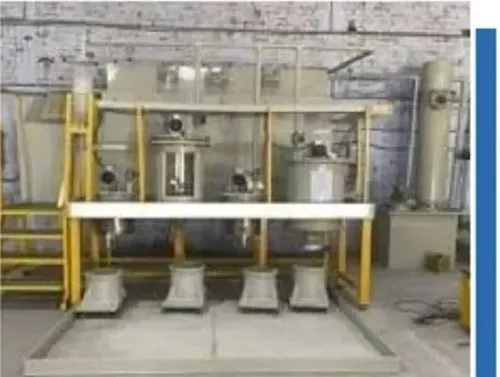
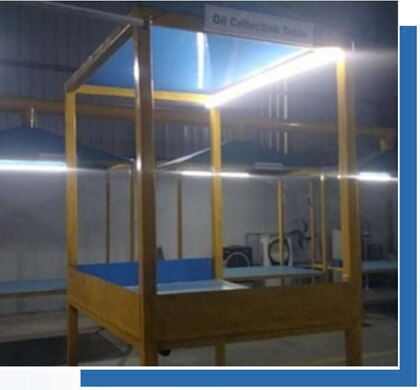 | OIL RECOVERY/COLLECTOR TABLE USE FOR:- TO DRILL FRIDGE COMPRESSOR AND COLLECT OIL IN DRUM MODEL NO. PT-OR 100 CAPACITY:- 1500 LTS IN ONE HOUR COLLECTION. View product → |
Frequently asked questions
What should an oil recovery collector table cost in Ghaziabad?
A basic manually drained mild-steel table commonly costs tens of thousands of rupees. Stainless-steel construction with a baffled sump, pump, piping and filtration can enter the low-lakh range. Compare prices by listing each included component and service.
How do you verify stock, delivery and service from a Ghaziabad supplier?
Ask for current stock photos, a written dispatch date, installation scope, warranty terms and contact details for a local service technician. Confirm whether freight, commissioning and spare parts are included.
What capacity and operating method should you specify?
State the expected oil volume per batch or hour, the material being drained, table dimensions, sump capacity and whether drainage is manual or pumped. Match the design to your drum or storage tank.
What drum, pump and electrical details prevent spills and downtime?
Specify drum connection size, overflow protection, pump flow rate and head, filtration rating, hose material, motor phase, voltage, power and control-panel protections. Confirm that the outlet and emergency shutoff are accessible.
How should you test the quotation before ordering oil recovery equipment?
Check the quotation against a component-by-component specification, then request a test run or video using a comparable oil load. Confirm leak testing, drainage performance, delivery condition, commissioning and warranty exclusions.
Keywords